
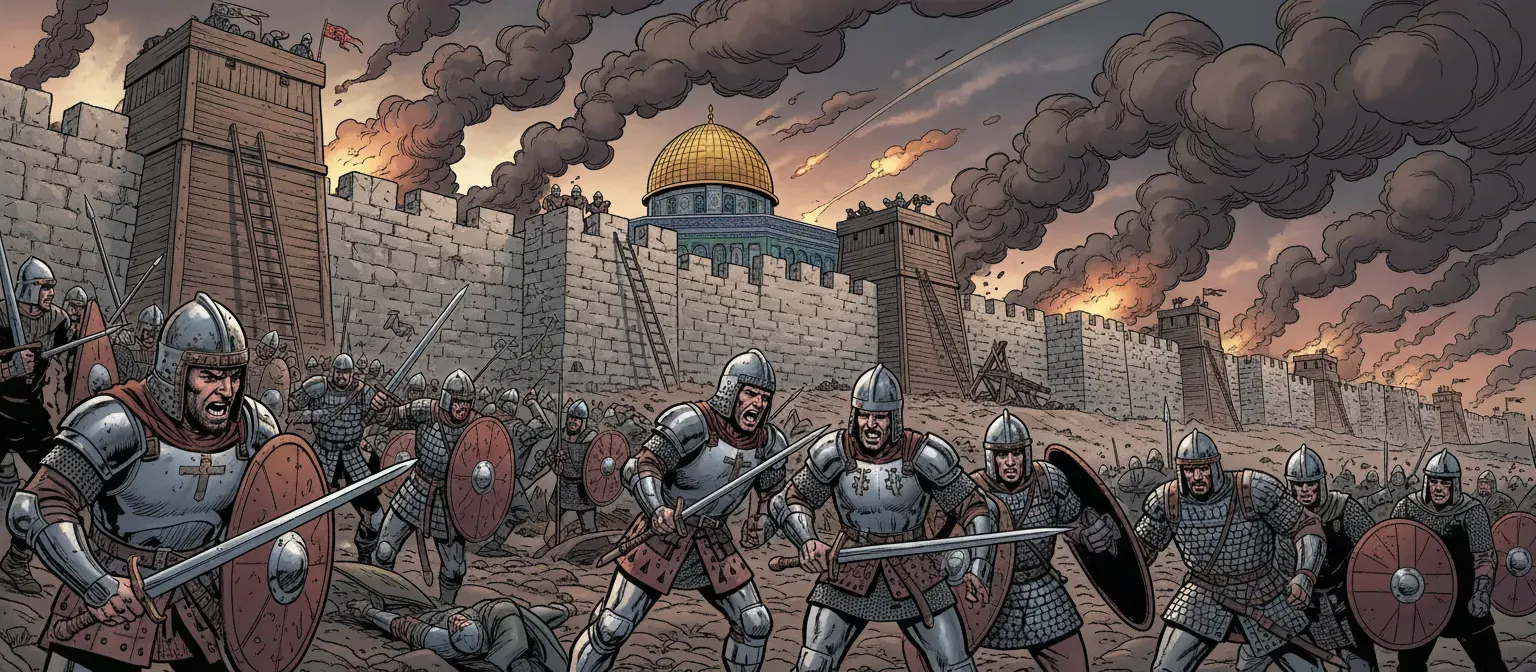
You are about to explore a key moment in medieval history. It’s the event that ended the First Crusade successfully. In 1099, Christian forces from Western Europe, led by Pope Urban II, broke into Jerusalem.
This crucial victory was the result of a long military campaign. It started after the Council of Clermont in 1095. The goal was to take back the Holy Land from Muslim rule.
The five-week siege, starting on June 7, 1099, showed the Crusaders’ determination and skill.
Key Takeaways
- The Siege of Jerusalem was a key event in medieval history.
- The First Crusade was started by Pope Urban II to reclaim the Holy Land.
- The siege lasted for five weeks, starting on June 7, 1099.
- The Crusaders successfully broke into Jerusalem’s defenses.
- The conquest marked the end of the First Crusade.
The Road to Jerusalem: Origins of the First Crusade
The First Crusade started in the late 11th century. It was a time when faith and politics mixed together. You lived in a world where these two forces were closely linked.

Pope Urban II’s Call to Arms at Clermont
In 1095, Pope Urban II called for help at the Council of Clermont. He asked for military aid against the Seljuk Turks. This was more than just a military action. It was a call to reclaim the Holy Land and make Christian pilgrimage safe.
Why Christians Sought to Reclaim the Holy Land
Christians wanted to take back the Holy Land. It was where Jesus lived, died, and was resurrected. Jerusalem and its areas were key for Christian faith and pilgrimage.
The Four Main Crusader Armies Form
The Crusader armies were not one group but several. They were led by Bohemond of Taranto, Godfrey of Bouillon, Raymond of Toulouse, and Count Hugh of Vermandois. Their formation started a complex journey to Jerusalem.
| Leader | Region/Nobility | Notable Event |
|---|---|---|
| Bohemond of Taranto | Norman, Italy | Siege of Antioch |
| Godfrey of Bouillon | Lorraine, France | Capture of Jerusalem |
| Raymond of Toulouse | Southern France | Leadership disputes |
| Count Hugh of Vermandois | France | Early departure |
The trip to Jerusalem was more than a war. It was a spiritual quest for many. Knowing why the First Crusade started helps us understand its importance in history.
The Long March to the Holy Land
Exploring the First Crusade reveals the challenges the Crusaders faced on their journey. They had to overcome military victories, hardships, and logistical issues. These tests showed the Crusaders’ determination.
Early Victories at Nicaea and Antioch
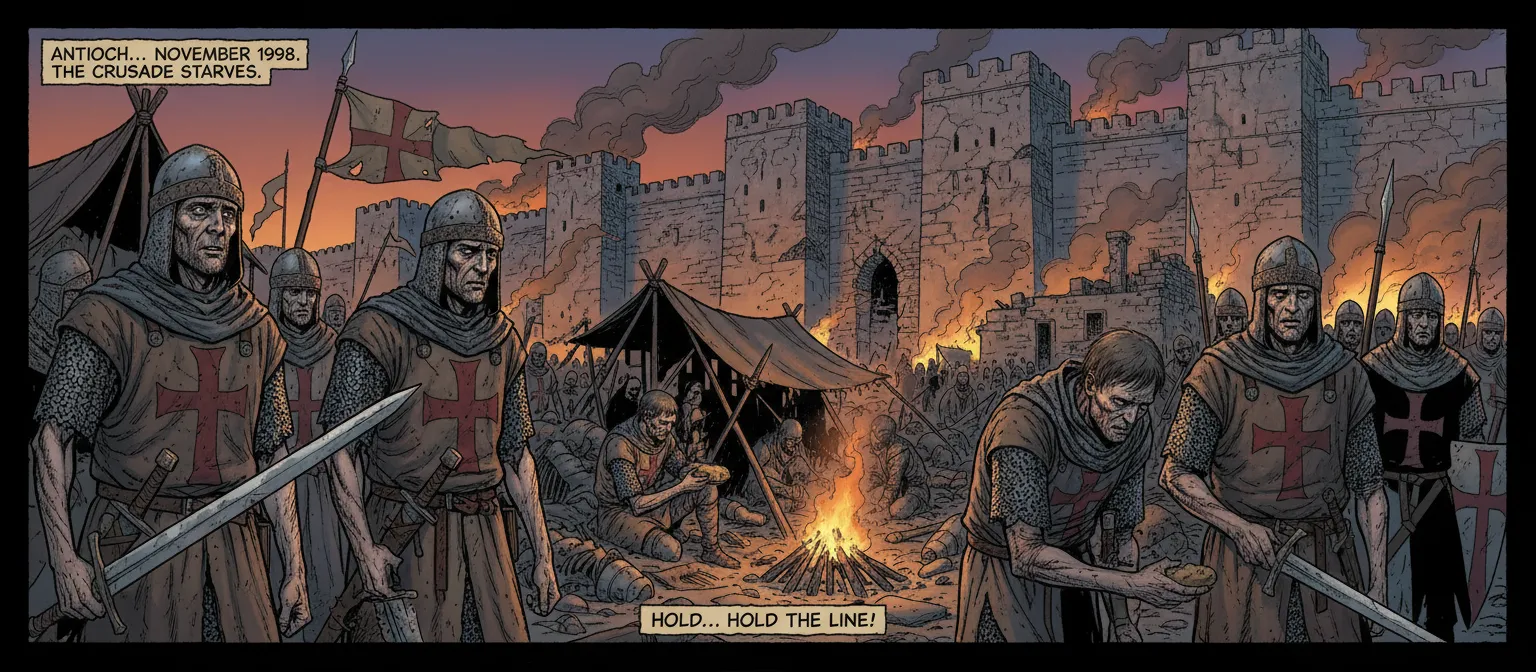
The Crusaders won key battles at Nicaea and Antioch. These victories boosted their morale and helped them move closer to Jerusalem. The siege of Antioch was tough but they emerged victorious in June 1098. These wins showed the Crusaders’ strength and willpower.

Hardships Along the Journey
Despite their victories, the Crusaders faced many challenges. They battled Turkish forces, endured harsh weather, and struggled with logistics. The long journey was tough, with many soldiers falling ill, hungry, or exhausted. The leaders had to keep their armies going despite these obstacles.
Your Guide to the Crusader Leaders
The leaders of the Crusader armies were key to their success and failures. Bohemond of Taranto, Raymond of Toulouse, and Godfrey of Bouillon made important decisions. Their leadership in medieval warfare greatly influenced the Crusade’s outcome.
| Leader | Role | Notable Achievements |
|---|---|---|
| Bohemond of Taranto | Leader of the Crusader army | Captured Antioch |
| Raymond of Toulouse | Leader of the Crusader army | Played a key role in the siege of Antioch |
| Godfrey of Bouillon | Leader of the Crusader army | Became the first ruler of the Kingdom of Jerusalem |
The Siege of Jerusalem 1099: Battle Tactics and Challenges
How did the Crusaders conquer Jerusalem’s strong defenses? It was a mix of smart planning and never giving up. The siege was a complex battle that used many tactics and machines.
Fatimid Defenders and Jerusalem’s Fortifications
The Fatimid garrison was ready for the Crusaders, having made Jerusalem’s defenses stronger. The city’s walls were thick and its towers were in key spots.
The defenders were set on keeping Jerusalem, but they had a tough fight ahead. They were short on supplies and faced a huge army.
Medieval Siege Warfare: Towers, Trebuchets, and Tunnels
The Crusaders used towers, trebuchets, and tunnels to get past Jerusalem’s walls. These medieval tactics were key to taking the city.
- Towers: Allowed Crusaders to climb up and fight the defenders on the walls.
- Trebuchets: Could throw heavy stones at the walls.
- Tunnels: Helped the Crusaders to weaken the walls from underneath.

The Barefoot Procession Around the Walls
The Crusaders, led by their leaders, walked barefoot around Jerusalem’s walls. They did this to ask for God’s help in taking the city.
Water Shortages and Summer Heat: The Race Against Time
The Crusaders had big problems, like not enough water and the summer heat. They had to break through the walls fast, before they ran out of food and water.
Despite these hard challenges, the Crusaders’ will to win helped them take Jerusalem.
The Capture of Jerusalem and Its Bloody Aftermath
Exploring the siege of Jerusalem reveals its capture’s importance. On July 15, 1099, the Crusaders took Jerusalem. This was the end of a long and hard journey.

Breaching the Walls: July 15, 1099
The Crusaders’ attack on Jerusalem’s walls succeeded on July 15, 1099. After weeks of siege, they broke through. The capture of Jerusalem was a big win, but it was costly.
The fight to breach the walls was fierce. The Crusaders used siege towers and catapults to weaken the defenses.
The Controversial Massacre of Inhabitants
After taking the city, the Crusaders killed many of its people. Accounts of the violence differ, but it’s clear many Muslims and Jews died. This event is a topic of much debate.
- The massacre was fueled by the Crusaders’ strong emotions and religious beliefs.
- Many people were killed, with estimates varying widely.
- This event has greatly influenced the history of the Crusades.
Establishing the Kingdom of Jerusalem
After capturing Jerusalem, the Crusaders set up the Kingdom of Jerusalem. The Kingdom was a key player in the Crusades’ history.
Creating the Kingdom was complex. They chose Godfrey of Bouillon as the first ruler. He worked to build a stable government.
Conclusion: How the First Crusade Changed Medieval History
The First Crusade had a huge impact on medieval history. It led to Christian rule in Jerusalem and shaped religious conflicts. The events of the Siege of Jerusalem in 1099 show how the crusade changed the medieval world.
The Siege of Jerusalem was a key moment in crusades history. It showed the strength and determination of the Crusader forces. The capture of the city on July 15, 1099, and the creation of the Kingdom of Jerusalem, had big effects on history.
The first crusade’s legacy is felt today. It changed the holy land conquest and the mix of religion and politics in the area. Learning about the First Crusade helps us understand medieval history and its lasting impact on our world.
FAQ
What was the main objective of the First Crusade?
The First Crusade aimed to take back the Holy Land, including Jerusalem, from Muslims. It was to ensure pilgrims could safely visit holy sites.
Who initiated the First Crusade?
Pope Urban II started the First Crusade at the Council of Clermont in 1095. He rallied Christians to join the cause.
What were some of the significant military victories of the Crusaders?
The Crusaders won key battles at Nicaea and Antioch. These victories helped them move closer to Jerusalem.
How did the Crusaders breach the defenses of Jerusalem during the Siege of 1099?
The Crusaders used siege engines like towers and trebuchets to break Jerusalem’s defenses. They captured the city on July 15, 1099.
What was the outcome of the capture of Jerusalem?
Taking Jerusalem led to the creation of the Kingdom of Jerusalem. It was a major shift in medieval history.
What was the significance of the barefoot procession around the walls of Jerusalem?
The barefoot procession showed the Crusaders’ deep faith. They prayed for God’s help during the siege.
What were some of the challenges faced by the Crusaders during the Siege of Jerusalem?
The Crusaders battled harsh weather, logistical issues, and water shortages. Their victory was all the more impressive given these challenges.
What was the impact of the First Crusade on medieval history?
The First Crusade greatly influenced medieval history. It shaped the religious and political scenes of the time and set the stage for future conflicts.
What was the role of the Knights Templar in the First Crusade?
The Knights Templar were key in the First Crusade’s aftermath. They protected pilgrims and defended Christian lands.

Leave a Reply