
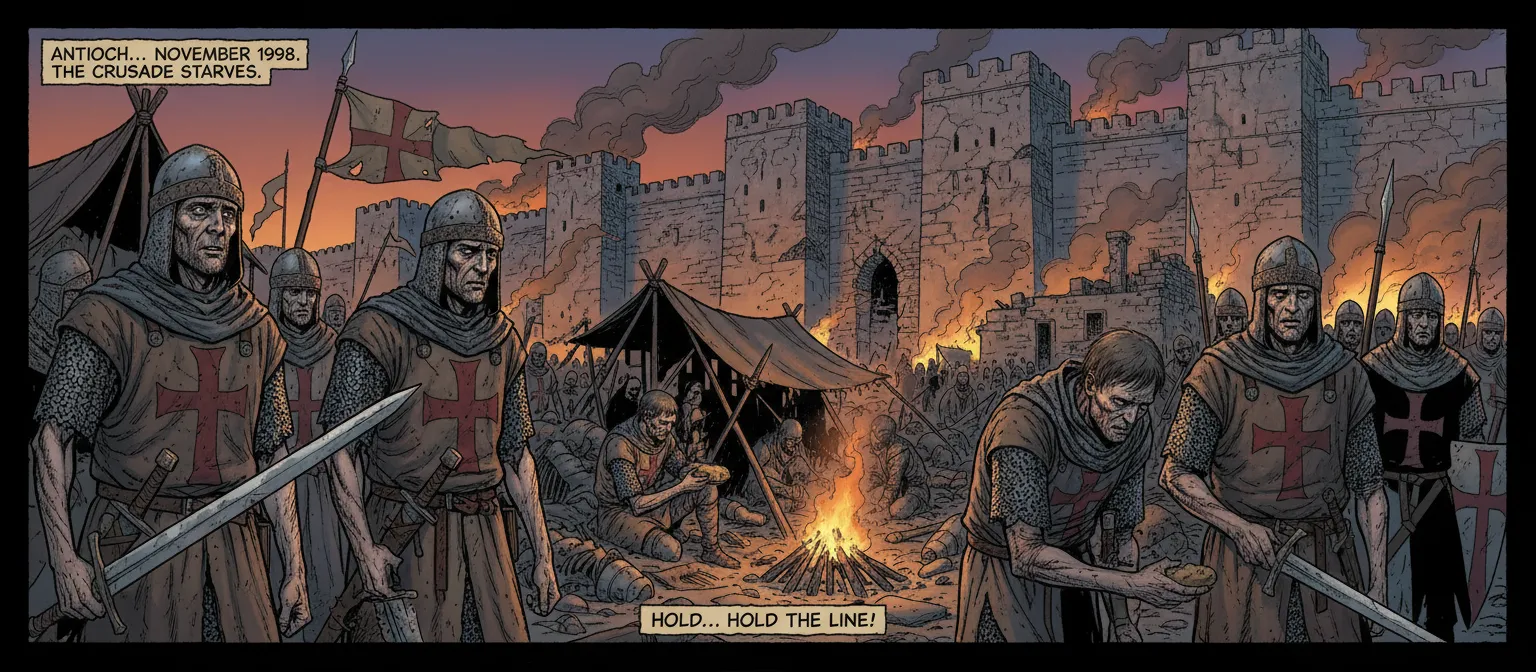
Did you know that during the siege of Antioch in 1098, the Crusaders had to deal with extreme hunger? This siege, a key moment in medieval Antioch’s history, lasted about eight months. It was a test of their will and survival abilities.
The city’s importance and the lead-up to the siege are key to understanding the Crusaders’ struggles. As you explore this time, you’ll see how they managed to take Antioch. Despite severe food shortages and other challenges, they succeeded.
Key Takeaways
- The siege of Antioch was a prolonged and challenging event in medieval history.
- Crusaders faced extreme starvation during the siege.
- The city’s capture was a significant turning point in the Crusades.
- Understanding the siege’s context is key to its historical importance.
- The siege lasted for about eight months.
The First Crusade: Path to Antioch
The journey to Antioch during the First Crusade was more than just moving from one place to another. It was filled with important events and choices that shaped the Crusade.
Pope Urban II’s Call to Holy War
In 1095, Pope Urban II called for holy war at the Council of Clermont. This was a key moment leading up to the First Crusade. It was not just a call to fight but also a strategic move that would change history.
The Crusader Armies and Their Leaders
The Crusader armies were led by many notable figures. Each had their own reasons and ways of leading.
Bohemond of Taranto and Raymond of Toulouse
Bohemond of Taranto and Raymond of Toulouse were two of the most important leaders. Bohemond was known for his cleverness and military skills, playing a big role in the siege of Antioch. Raymond was driven by both religious passion and political goals.
Godfrey of Bouillon and Other Notable Figures
Godfrey of Bouillon was another key leader, famous for his bravery. He was later crowned the first ruler of the Kingdom of Jerusalem. Other leaders like Robert of Flanders and Stephen of Blois also played important roles in the Crusader armies.
- The First Crusade was a complex historical event.
- Pope Urban II’s call to holy war was a key moment.
- The Crusader armies were led by various notable figures.
Antioch: The Jewel of Syria
Antioch was a precious gem in the medieval world. It was important for both strategic and symbolic reasons. As a major city, it controlled the area around it.
Strategic and Symbolic Importance
Antioch was special in many ways. It was a key spot for trade and culture. Its strategic location made it highly sought after by empires. For more on Antioch’s history, check out this detailed historical account.
The City’s Formidable Defenses
Antioch’s defenses were known for their strength. The city had:
- Massive Walls and 450 Towers: Its walls, with 450 towers, showed its strong defense.
- Natural Protections and Terrain Advantages: Mountains and rivers also helped protect it from invaders.

Turkish Control and Preparations
When the Turks took control, they made Antioch’s defenses even stronger. They knew the symbolic importance of Antioch. They worked hard to keep it safe, ready for any Crusader attack.
Knowing about Antioch’s defenses helps us understand the Crusaders’ challenges. The city’s antioch defense system was incredibly strong. It made the city a tough target for the Crusaders.
The Siege of Antioch: Initial Phases
The Crusaders arrived outside Antioch in October 1097, starting a long siege. You’ll see how the leaders made strategic choices and the obstacles they faced.
Crusader Arrival in October 1097
In October 1097, Crusader armies, led by Bohemond of Taranto and Raymond of Toulouse, reached Antioch. The city had strong walls and a key location. The Crusaders wanted to take it but knew it wouldn’t be easy.
Early Tactical Challenges
When they arrived, the Crusaders faced big challenges. The city’s defenses were strong, and they didn’t have the right tools to break through. The Turkish garrison inside was ready to fight, making things even harder.
Establishing the Blockade
To tackle these issues, the Crusaders set up a blockade around Antioch. They aimed to block the city’s access points.
Control of Bridge Gate and Saint George Gate
The Crusaders focused on the Bridge Gate and Saint George Gate. These were key to getting into the city. They wanted to stop supplies and weaken the defenders.
Incomplete Encirclement Problems
But, they soon found it hard to fully surround the city. The terrain and city layout made it tough. This let the Turkish garrison get help, extending the siege.

The siege went on, with the Crusaders facing many problems. Supplies were low, and the weather was harsh. Yet, they kept pushing, driven by faith and the dream of victory.
Hunger as the Enemy: The Winter of Despair
Winter brought a new battle to the Crusaders at Antioch. This time, the enemy was hunger, not the Turkish defenders. The winter of 1097-1098 was a time of great suffering.

Dwindling Food Supplies
At first, the Crusaders were hopeful. But as weeks turned into months, their food ran out. They faced desperate times with little to eat.
Foraging Expeditions and Their Dangers
Crusaders went out to find food, facing danger at every turn. They risked ambushes and battles with the Turks. Yet, finding food was a must for survival.
Eating Horses, Dogs, and Rodents
As hunger grew, the Crusaders ate anything they could. This included horses, dogs, and even rodents. Their diet was poor, weakening them further.
| Food Source | Nutritional Value | Availability |
|---|---|---|
| Horses | High in protein | Limited, as they were used for transportation |
| Dogs | Moderate protein | Uncommon, as they were not typically raised for food |
| Rodents | Low in nutrients | Relatively more available |
The Ravages of Starvation
Starvation weakened the Crusaders, both physically and mentally. Many got sick, and the army’s strength waned. This was a very hard time for them.
Desertion and Crisis of Faith
As things got worse, more Crusaders left. Their morale was low, leading to doubts about their mission. The hardships made them question their faith.
Turning Point: Infiltration and Betrayal
A breakthrough in the siege of Antioch happened when Bohemond made a secret deal with a city guard. This key moment changed the Crusaders’ luck as they fought to get into the city.
Bohemond’s Secret Alliance with Firouz
Bohemond knew a direct attack wouldn’t work. So, he made a secret deal with Firouz, a tower commander. This deal was key because it gave the Crusaders a way into the city.
The Night Attack on June 2, 1098
On June 2, 1098, at night, the Crusaders attacked Antioch. With Firouz’s help, they climbed the walls and got into the city. This bold move showed Bohemond’s smart planning.

Massacre and Conquest
When the Crusaders got into Antioch, chaos broke out. Many defenders and people were killed or taken prisoner. The conquest was brutal, showing the harsh side of medieval war.
Opening the Gates to the Crusader Army
With the city walls broken, the Crusaders let more of their army in. This was the start of the end for Antioch’s defenders. The city’s citadel was the last place to resist.
The Fall of the Citadel
The citadel, a strong fortress, was taken by the Crusaders. Its fall meant Antioch was fully conquered. This victory came at a high cost in blood and suffering for both sides.
From Besiegers to Besieged: The Counter-Siege
After taking Antioch, the Crusaders faced a huge relief army led by Kerbogha. This turned the tables, making them the ones under attack.
Kerbogha’s Massive Relief Army
Kerbogha’s army was a powerful force, made up of warriors from many places. They all wanted to take back Antioch. The Crusaders, though they had won the city, were outnumbered and had to defend it against Kerbogha’s army.
The Discovery of the Holy Lance
The Crusaders got a boost when they found the Holy Lance. It was believed to be the spear that wounded Christ. This discovery lifted their spirits.
Peter Bartholomew’s Vision
Peter Bartholomew, a monk, said he had a vision from Saint Andrew. It told him where the Holy Lance was. They found it in the church of St. Peter in Antioch.
Impact on Crusader Morale
Finding the Holy Lance gave the Crusaders a new sense of purpose. It made them believe their mission was supported by God. This gave them the courage to keep going.
The Decisive Battle of June 28
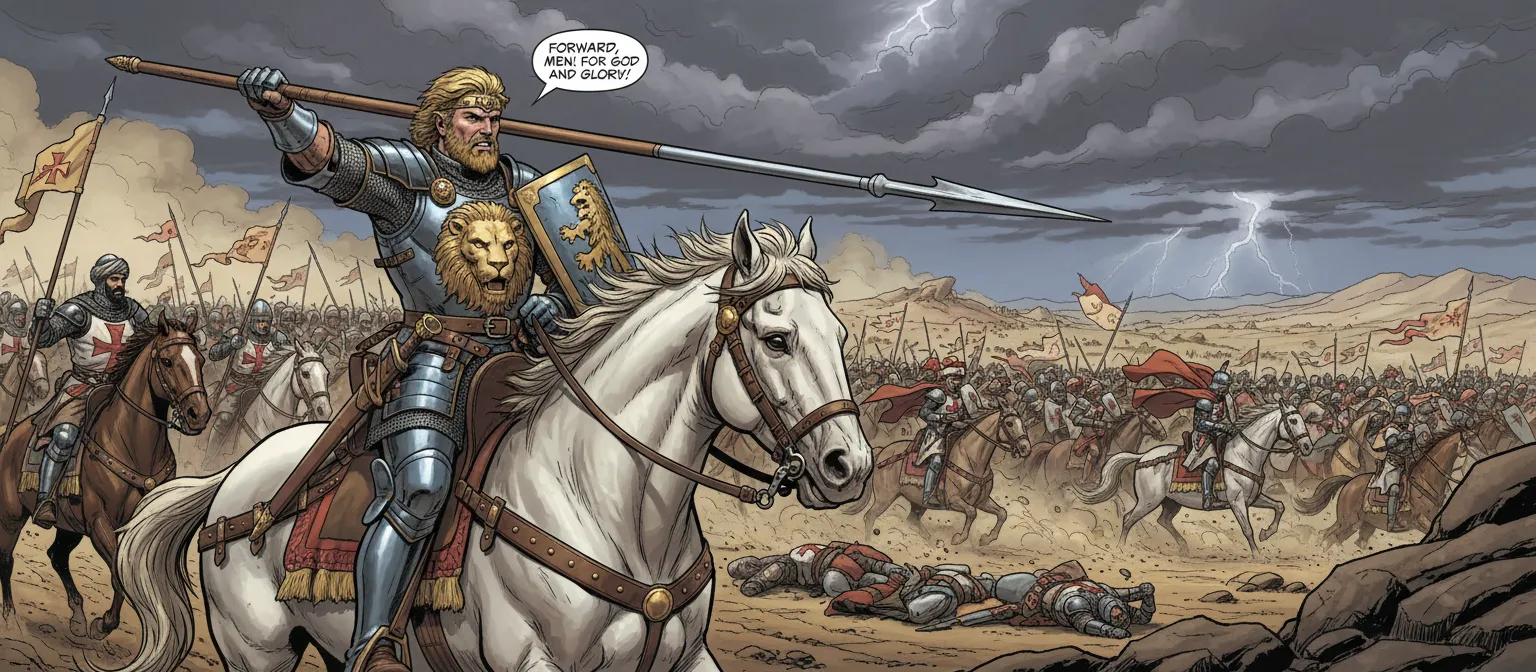
With the Holy Lance in hand, the Crusaders attacked Kerbogha’s army on June 28, 1098. Despite being fewer in number, they fought bravely. They won a key battle that changed the First Crusade’s path.
Conclusion: The Legacy of Antioch’s Fall
The siege of Antioch during the First Crusade was a key moment in history. It was a turning point for the Crusaders on their way to Jerusalem. The fall of Antioch was a mix of military tactics, hunger, and faith.
The impact of Antioch’s fall is felt in history and the Crusades. The city’s strong defenses made it a key place in medieval times. It changed the Crusade’s path.
The Crusaders’ time at Antioch shaped their faith and determination. Finding the Holy Lance and winning against Kerbogha’s army boosted their belief in their mission.
The story of Antioch shows the power of faith and determination against great odds. The siege of Antioch is a key part of history. It teaches us about war, faith, and human strength.
FAQ
What was the significance of Antioch during the First Crusade?
Antioch was key in the First Crusade. It was a major Christian center. The Crusaders saw capturing it as a top goal.
Who led the Crusader armies during the siege of Antioch?
Nobles like Bohemond, Raymond of Toulouse, and Godfrey of Bouillon led the Crusaders. Each played a big role in the siege.
What challenges did the Crusaders face during the siege of Antioch?
The Crusaders faced many challenges. These included starvation, harsh weather, and the city’s strong defenses. The Turks controlled the city.
How did the Crusaders eventually capture Antioch?
The Crusaders captured Antioch through a secret alliance. Bohemond worked with Firouz, a local Armenian convert. This allowed a small group to sneak in. Then, a night attack on June 2, 1098, won the city.
What was the significance of the Holy Lance discovery during the siege?
Finding the Holy Lance boosted the Crusaders’ morale. It was believed to be the spear that pierced Jesus’ side. This discovery was key to their victory against Kerbogha’s army.
What was the outcome of the siege of Antioch for the Crusaders?
The siege was a costly but significant victory for the Crusaders. It gave them a key stronghold. This allowed them to move closer to Jerusalem.
How did the siege of Antioch impact the Crusader movement?
The siege was a turning point in the First Crusade. It showed the Crusaders’ determination and resilience. It set the stage for their capture of Jerusalem.
What were the conditions like for the Crusaders during the winter of the siege?
The winter was very hard for the Crusaders. They faced starvation, disease, and harsh weather. These conditions tested their resolve and morale.

Leave a Reply