
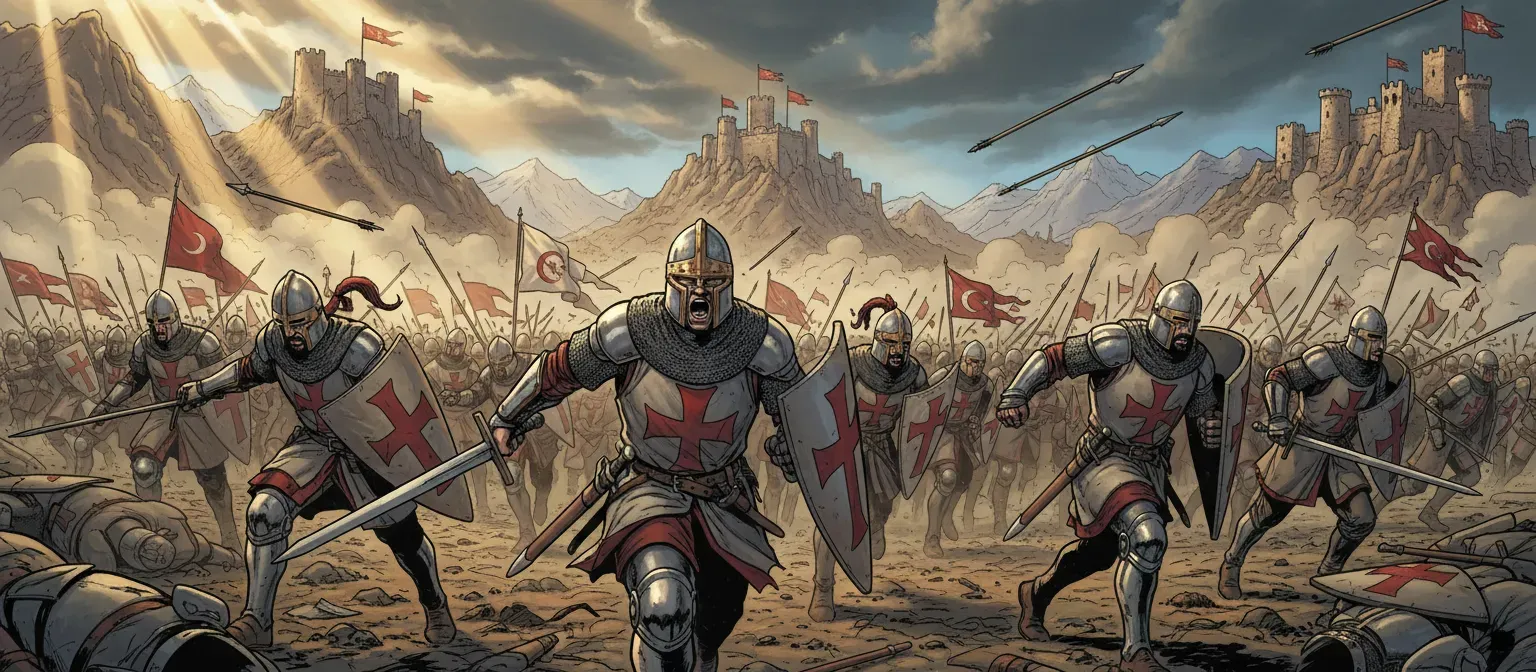
This time was full of military actions and new tech that changed warfare. As you dive into crusader warfare, you’ll see the tactics, weapons, and plans that made these battles unique.
Key Takeaways
- The Crusades were a series of military campaigns aimed at reclaiming the Holy Land.
- The period saw significant military actions and technological exchanges.
- Crusader warfare was characterized by unique tactics and strategies.
- The conflicts had a lasting impact on the development of military strategy.
- Understanding crusader warfare provides insights into medieval history.
The Historical Context of the Crusades
Pope Urban II’s call in 1095 started a long and complex time in history. It was not just a simple call to war. It was the result of many religious, political, and social issues that had been growing for years.
The Call to Holy War and Papal Authority
The Pope called for war to help the Byzantine Empire against the Seljuk Turks. This appeal was not just about defending Christian lands. It also united the broken kingdoms of Europe under one goal. The idea of holy war tactics became key, with the Church promising spiritual benefits to those who fought.

The Major Crusade Campaigns (1096-1291)
The First Crusade, starting in 1096, was the most successful at first. It captured Jerusalem in 1099. Later crusades tried to keep the Holy Land, but with mixed results. Groups like the Knights Templar were vital, providing strength and support.
Religious and Political Motivations Behind the Crusades
The reasons for the Crusades were complex. Some fought to reclaim the Holy Land for Christianity. Others sought land, power, and trade. Knowing these reasons helps us understand the crusade history and its effects on Europe and the Middle East.
The Crusades’ legacy affects us today. It’s a key area for historians and scholars to study.
Crusader Warfare: Organization and Military Structure
It’s key to know how crusader forces were set up and led to understand their military tactics. You’ll learn how each part of the crusader armies helped them fight well.
Composition of Crusader Armies
Crusader armies were made up of many different groups. The main parts were knights and heavy cavalry, infantry, and support units.
Knights and Heavy Cavalry
Knights and heavy cavalry were the top fighters in crusader armies. They were heavily armored and rode strong horses. Their charge was key in many battles.
Infantry and Support Units
Infantry was very important in crusader warfare. They were backed by archers and crossbowmen for ranged attacks. Together, these groups worked to reach their goals.

The Military Orders: Knights Templar and Hospitallers
The Knights Templar and Hospitallers were key in crusader battles. They were disciplined and followed strict rules. Their help was big in the Crusades.
Command Structure and Leadership Challenges
The leadership of crusader armies was complex. Good leadership was vital for working together and making plans. But, leading was hard, and it often changed the outcome of battles.
Understanding how crusader armies were organized and led helps us see the complexity of medieval warfare. It shows how important each part was in the Crusades.
Weapons and Equipment of Crusader Forces
The Crusades were shaped by the weapons and equipment used. These tools saw big changes in military tech, like armor, offensive arms, and siege engines.
Armor Evolution Throughout the Crusades
The Crusades were a time of big steps in armor tech. Crusader forces took and improved armor from many sources, leading to major advancements.
Mail and Plate Armor Development
Mail armor, made from iron rings, was key in the early Crusades. It was flexible and protected well. Later, plate armor came along, giving more defense against heavy attacks.
Helmets and Shields
Helmets got better to protect the head, with designs like the great helm and nasal helm. Shields, made of wood or metal, helped defend, with the kite shield being a top choice for knights.
Offensive Weapons and Their Tactical Uses
Crusader forces used many offensive weapons, each with its own strengths.
Swords, Lances, and Maces
Swords were used by both foot soldiers and horsemen. Lances were for knights to charge with. Maces were good against armored foes.
Ranged Weapons: Crossbows and Longbows
Crossbows and longbows were key for ranged attacks. Crossbows were strong, while longbows fired faster.
| Weapon | Tactical Use | Advantages |
|---|---|---|
| Swords | Close combat | Versatile, effective against armored and unarmored opponents |
| Lances | Cavalry charges | High impact, effective against formations |
| Maces | Close combat against armored opponents | Effective at crushing armor and delivering blunt trauma |
Siege Engines and Technology
Siege warfare was key in Crusader battles, with many engines used to attack or defend.
Trebuchets and catapults were top siege engines. They threw stones or other objects at enemy walls.
Battlefield Tactics and Combat Strategies
Exploring crusader warfare reveals the key role of battlefield tactics. These tactics were vital in medieval battles. The Crusades were complex conflicts that needed creative and flexible military strategies.

The Shock of Heavy Cavalry Charges
Crusader forces used heavy cavalry charges as a major tactic. Knights, in heavy armor, rode powerful horses to break through enemy lines. This tactic worked well against less organized or lightly armored foes.
Infantry Formations and Defensive Tactics
Infantry formations were also critical in crusader warfare. Foot soldiers, armed with pikes or swords, formed tight groups. These groups helped protect against enemy cavalry and infantry, key in battles against larger forces.
Adapting European Warfare to Middle Eastern Conditions
Crusaders had to adjust their tactics for the Middle East’s climate, terrain, and enemy strategies. They learned from their foes, adopted new tech, and changed their plans to fit local conditions.
Notable Battles and Their Strategic Lessons
Several battles in the Crusades taught the crusaders important lessons. The Battle of Hattin and the Siege of Acre were two key battles.
The Battle of Hattin (1187)
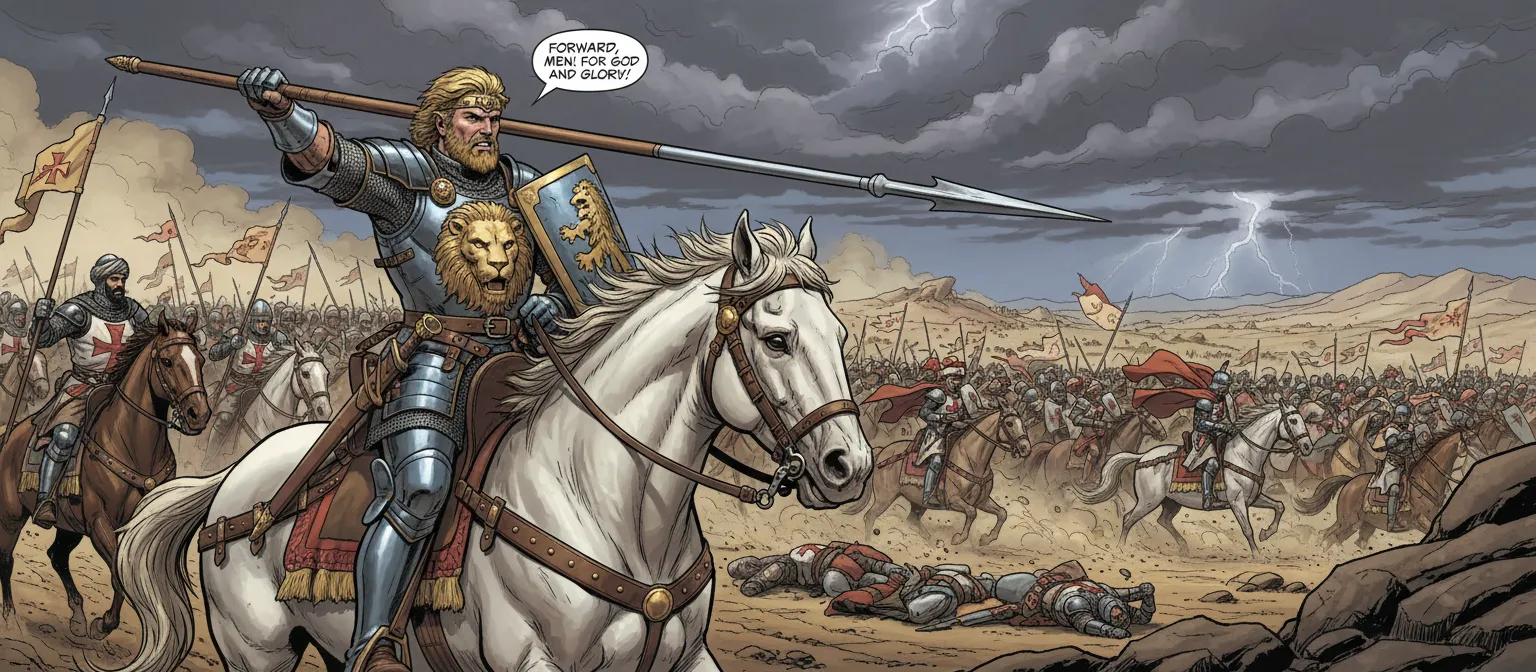
The Battle of Hattin was a major defeat for the crusaders. It showed the importance of gathering intelligence, managing logistics, and understanding the terrain. The crusader army, led by King Guy of Lusignan, lost to Saladin’s forces, marking a significant shift in the Crusades.
The Siege of Acre (1189-1191)
The Siege of Acre showed the crusaders’ skill in siege warfare. The two-year siege ended with the crusaders taking the city. This victory highlighted their determination and strategic skills.
Siege Warfare and Fortifications in the Holy Land
Exploring the Crusades, we see siege warfare as key. The Holy Land, with its strategic spots and strong cities, was a key battleground. Many sieges here shaped the Crusades’ outcome.

Castle Design and Defensive Innovations
Crusader castles had advanced defenses like concentric walls and machicolations. These helped them stand against sieges. Built on high places, they were even stronger.
Siege Tactics and Countermeasures
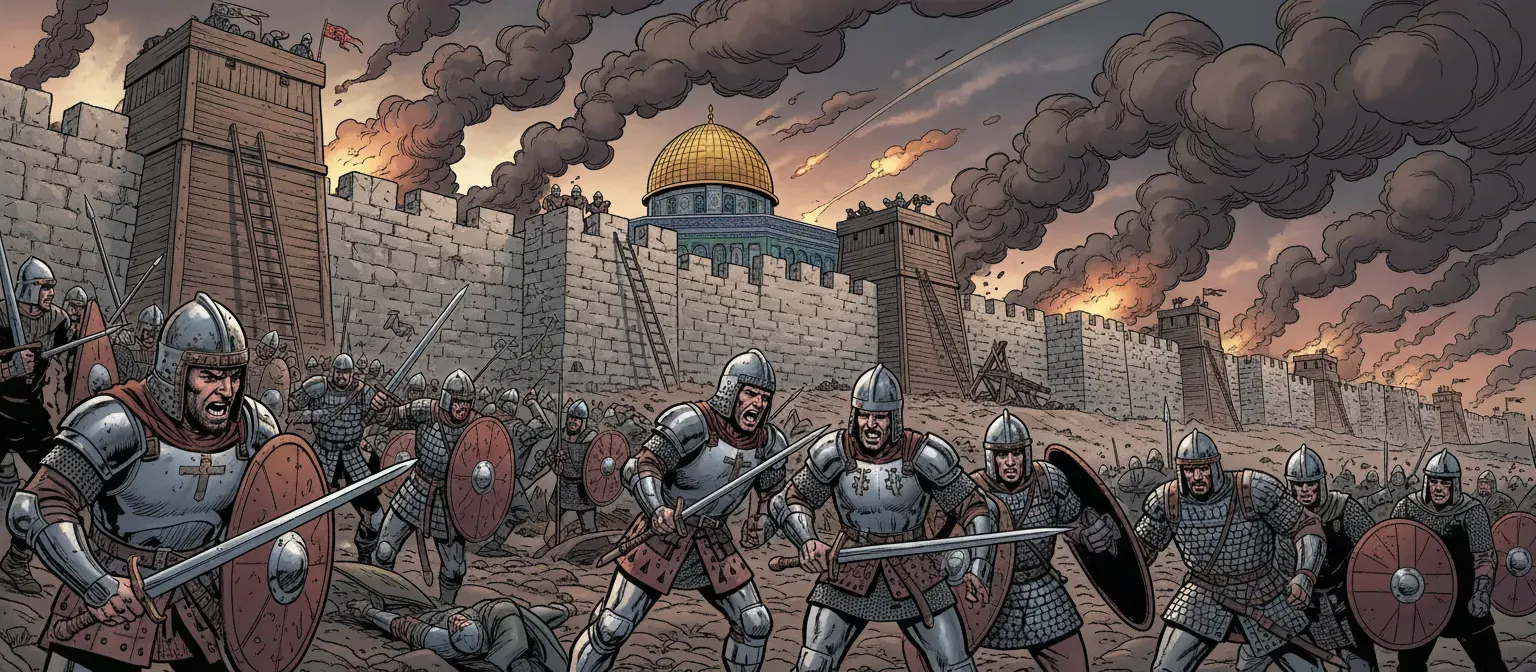
Siege tactics included mining and sapping and using trebuchets and siege towers. Knowing these tactics helps us understand Crusader warfare.
Mining and Sapping Operations
Mining and sapping were key in siege warfare. Attackers dug tunnels to break walls or make breaches. Defenders dug back to stop them.
Trebuchets and Siege Towers
Trebuchets were strong engines for breaking walls. Siege towers let attackers cross moats and reach walls. These tools were vital in siege success or failure.
| Siege Engine | Description | Tactical Use |
|---|---|---|
| Trebuchet | Powerful catapult using counterweight | Breaching walls or fortifications |
| Siege Tower | Mobile tower to cross moats and walls | Allowing troops to ascend walls |
Logistics and Supply Challenges During Sieges
Sieges were hard to manage, needing lots of resources. For more on logistics, see Palgrave Advances in the Crusades.
The Evolution of Crusader Castles
Crusader castles changed a lot over time. They got new tech and defense plans. This shows how they kept adapting to siege warfare.
Conclusion: The Legacy of Crusader Military Innovations
The Crusades greatly influenced military tactics and technology, shaping warfare in the Middle Ages. Exploring crusader warfare shows how these innovations impacted European military practices.
The tactics, weapons, and strategies from the Crusades helped evolve warfare. Studying crusader warfare shows how military strategy, technology, and logistics interacted. For more insight, check out The Oxford History of the Crusades.
The impact of crusader military innovations is seen in siege warfare, fortifications, and tactics. Reflecting on the Middle Ages, it’s clear the Crusades were key in military history.
FAQ
What were the main objectives of the Crusades?
The Crusades aimed to take back the Holy Land from Muslims and protect Christian lands. They started in 1095 with the First Crusade, led by the Catholic Church.
What role did the Knights Templar play in crusader warfare?
The Knights Templar were a key military group in the Crusades. They helped protect Christian pilgrims and territories. Known for their bravery and tactics, they were a strong force.
What was the significance of heavy cavalry charges in crusader warfare?
Heavy cavalry charges were vital in the Crusades. They could break enemy lines with a powerful attack. Knights and heavy cavalry were the main force behind these charges.
How did crusader forces adapt to the conditions of the Middle East?
Crusader forces learned to fight like the locals. They used light cavalry and infantry. They also found ways to outsmart their Muslim foes.
What was the importance of siege engines and technology in crusader warfare?
Siege engines like trebuchets were key. They helped crusaders break into enemy forts. This was a big advantage in battles.
How did the Crusades influence the development of medieval warfare?
The Crusades changed medieval warfare a lot. They introduced new tactics and technologies. These ideas spread across Europe, changing how armies fought.
What were some of the key battles and sieges fought during the Crusades?
Important battles included the Battle of Hattin and the Siege of Acre. These showed the skill and strategy of crusader leaders.
How did the design of crusader castles evolve over time?
Crusader castles got better over time. Early ones used local materials. Later ones had advanced defenses like concentric walls.

Leave a Reply