
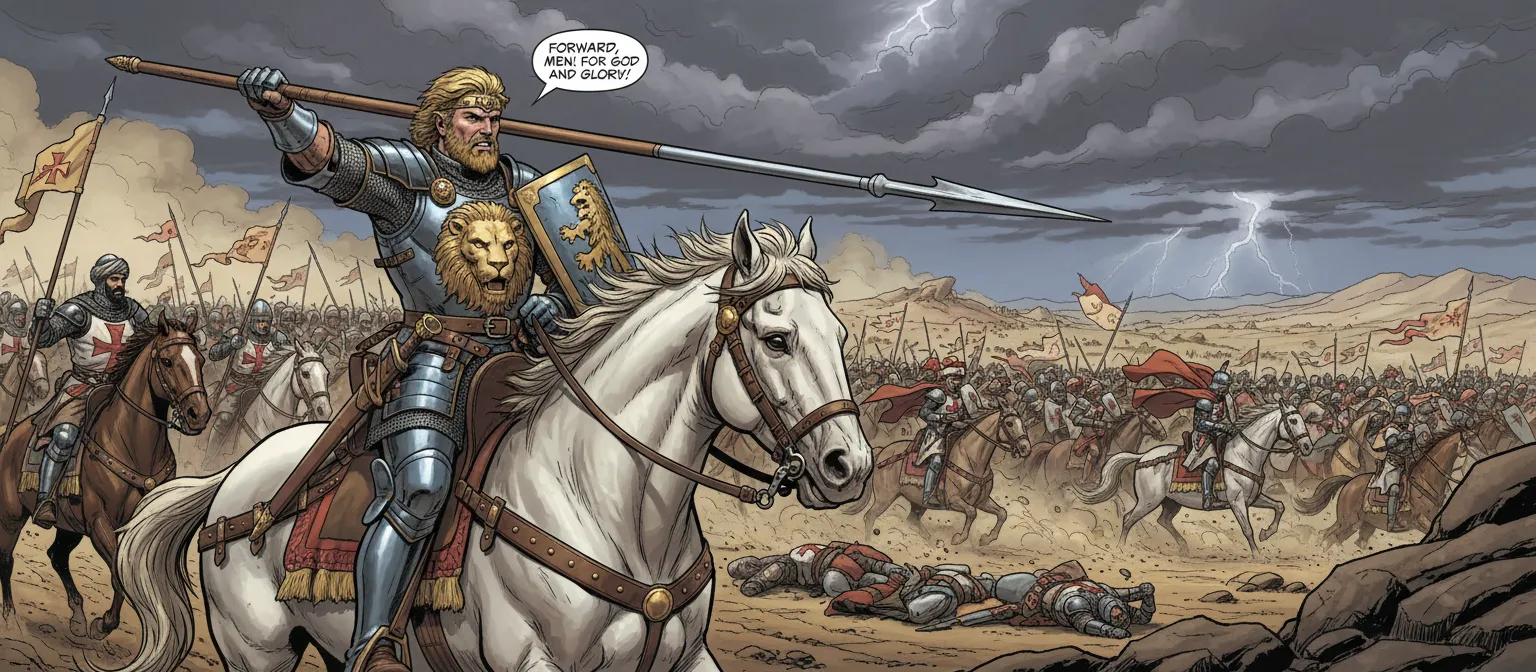
On September 7, 1191, a key battle of the Third Crusade happened. It was between Richard the Lionheart and Saladin at Arsuf.
This defining moment in medieval history saw Richard I of England lead a diverse Crusader force to win. They faced a much larger army of the Ayyubid Sultanate led by Saladin. The Battle of Arsuf showed Richard’s skill and his army’s discipline, marking a big win for the Crusaders.
Exploring this event will give you a deeper understanding of the military strategies and historical context. It led to this important confrontation.
Key Takeaways
- The Battle of Arsuf was fought on September 7, 1191.
- Richard the Lionheart led the Crusader forces to victory.
- The battle was a significant victory for the Crusaders.
- It showcased Richard’s tactical prowess and army discipline.
- The battle was part of the Third Crusade.
Historical Context of the Third Crusade
Exploring the Third Crusade’s history reveals the events leading to the Battle of Arsuf. This crusade was sparked by Jerusalem’s fall to Saladin in 1187. This event shocked Europe and called for action.
The Fall of Jerusalem and Call to Arms
The loss of Jerusalem to Saladin was a huge setback for Christendom. It led to a massive support for the Crusade. European leaders, including King Richard I of England, King Philip II of France, and Holy Roman Emperor Frederick I, answered the call. They were driven by religious zeal, political goals, and a thirst for adventure.

The March Through the Holy Land
Richard chose to march from Acre to Jaffa in August 1191. He wanted to capture Jaffa to get supplies and a way for more troops to arrive. The journey was tough, with bad weather and attacks from Saladin’s forces. Yet, Richard’s leadership and strategy kept the Crusader army strong, ready for the Battle of Arsuf.
The Third Crusade’s history is key to understanding the Battle of Arsuf. It was a time of big military and diplomatic moves, with both sides facing heavy losses.
The Legendary Commanders
Richard the Lionheart and Saladin are names that stand out in history. They clashed in the Battle of Arsuf, a key moment in the Third Crusade. Let’s explore what made these leaders so formidable.

Richard the Lionheart: England’s Warrior King
Richard I of England, known as Richard the Lionheart, was a skilled military leader. He played a big role in the Third Crusade. His bravery and tactical skills were unmatched.
Historian John Gillingham says Richard’s strength wasn’t just in brute force. It was in his strategic planning and ability to adapt. Richard inspired his troops and made key decisions on the battlefield.
At the Battle of Arsuf, Richard used a defensive formation. He formed a phalanx formation to protect his troops from Saladin’s cavalry. This move led to a Christian victory.
Saladin: The Respected Muslim Leader
Saladin, or Ṣalāḥ al-Dīn Yūsuf ibn Ayyūb, was a respected Muslim leader. He united factions against the Crusaders. His strategic thinking and ability to unite forces were key to his success.
Saladin often used harassment tactics. He would use swift cavalry attacks to weaken the Crusaders before a big battle. His knowledge of the terrain and adaptability were vital in his battles with Richard.
A medieval chronicler once said, “Saladin was a just and noble leader, loved by his people and respected by his enemies.” This quote captures Saladin’s fairness, nobility, and the respect he earned from all sides.
The Battle of Arsuf: A Tactical Masterpiece
Exploring the Battle of Arsuf reveals the details of medieval warfare and Richard’s strategic brilliance. This battle was key in the Third Crusade. It showed the military tactics and discipline of the Crusader army.
The Crusader Army’s Formation
The Crusader army marched towards Arsuf in a defensive formation. Richard chose the perfect time to counterattack. The army was divided into groups, with the Knights Templar and Hospitaller at the rear.
The Crusaders’ discipline was key in facing Saladin’s constant attacks. Richard’s leadership and the Knights Templar’s bravery were vital in keeping the formation strong.
Saladin’s Harassment Strategy
Saladin’s forces used a harassment strategy, attacking the Crusader army as it marched. These attacks aimed to disrupt the Crusader formation and find a chance for a big win.
Saladin’s forces were quick and used the terrain to surprise the Crusaders. But the Crusaders stayed in formation, waiting for the perfect moment to strike back.

Military Technology and Weaponry
The Battle of Arsuf showcased medieval warfare’s military technology and weaponry. The Crusaders used heavy cavalry, while Saladin’s forces had mounted archers.
| Military Unit | Primary Weaponry | Tactical Role |
|---|---|---|
| Knights Templar | Lances, Swords | Heavy Cavalry, Rear Guard |
| Mounted Archers | Bows, Arrows | Skirmishing, Harassment |
| Infantry | Swords, Shields | Defensive Line, Support |
The Battle of Arsuf’s outcome was shaped by both sides’ use of military technology and weaponry. Richard’s timely counterattack was key to the Crusaders’ victory.
The Turning Point and Aftermath
The battle between Richard and Saladin at Arsuf was more than a fight. It showed the long-lasting conflict in the Holy Land. This battle, known as the Battle of Arsuf, was a key moment in the Third Crusade.

The Hospitallers’ Charge and Richard’s Decision
The Hospitallers’ charge at the Battle of Arsuf was a turning point. Richard’s support for this charge was key to the Crusaders’ win. The Hospitallers, known for their bravery, were vital to the Crusader army’s success.
Richard’s leadership and strategy were clear during the battle. He waited until the right moment to charge. This surprise attack caught Saladin’s forces off guard, leading to a big victory for the Crusaders.
The Decisive Christian Victory
The Battle of Arsuf was a big win for the Crusaders. It showed Richard’s military strategy worked well. The battle showed the power of working together and having a strong leader.
“The victory at Arsuf was a beacon of hope for the Crusaders, demonstrating that with unity and strong leadership, they could overcome the challenges posed by their adversaries.”
Impact on the Third Crusade Campaign
The Battle of Arsuf changed the Third Crusade campaign. The victory gave the Crusaders control over the central coast of Palestine. This was a big advantage for them.
The success at Arsuf also showed the complexity of the Middle East conflict during the Crusades. The battle was more than just fighting. It involved strategy, politics, and culture.
Conclusion: The Legacy of Arsuf in Medieval Warfare
The Battle of Arsuf was a key moment in medieval history. It showed Richard the Lionheart’s tactical skill and the Crusaders’ bravery. The disciplined tactics and smart decisions made a big difference in the battle’s outcome.
The Knights Templar were key in medieval warfare. Their role in the Battle of Arsuf highlights their military strength. This battle was a turning point in the Crusades, showing its lasting impact.
Historians and military strategists study the Battle of Arsuf to this day. It offers deep insights into medieval warfare’s complexities. By looking at this battle, you understand the details of historical battles and their lasting effects on medieval history.
FAQ
What was the significance of the Battle of Arsuf in the Third Crusade?
The Battle of Arsuf was a big win for Richard the Lionheart and the Crusaders. It showed their skill and discipline. It was a key moment in the Third Crusade.
Who were the main commanders in the Battle of Arsuf?
Richard the Lionheart, the King of England, and Saladin, the Sultan of Egypt and Syria, were the main leaders.
What was the historical context that led to the Battle of Arsuf?
Saladin took Jerusalem in 1187, which called for a Crusader movement across Europe. Richard marched to the Holy Land to take it back.
What was the role of the Knights Templar in the Battle of Arsuf?
The Knights Templar were key in the battle. They fought with other military orders. Their efforts helped the Crusader army’s discipline and tactics.
What was the outcome of the Battle of Arsuf, and how did it impact the Third Crusade?
The Crusaders won decisively at Arsuf. This victory boosted their morale. It showed Richard’s tactical genius, affecting the Third Crusade’s campaign.
How did the Battle of Arsuf influence medieval warfare?
Arsuf showed the power of disciplined formations and tactical decisions. It shaped medieval warfare and history.
What was Saladin’s strategy during the Battle of Arsuf?
Saladin tried to weaken the Crusaders with constant attacks. But, he couldn’t break their disciplined lines.
What was the significance of Richard’s decision to support the Hospitallers’ charge?
Richard’s support for the Hospitallers’ charge was a turning point. It helped the Crusaders win the battle.

Leave a Reply