
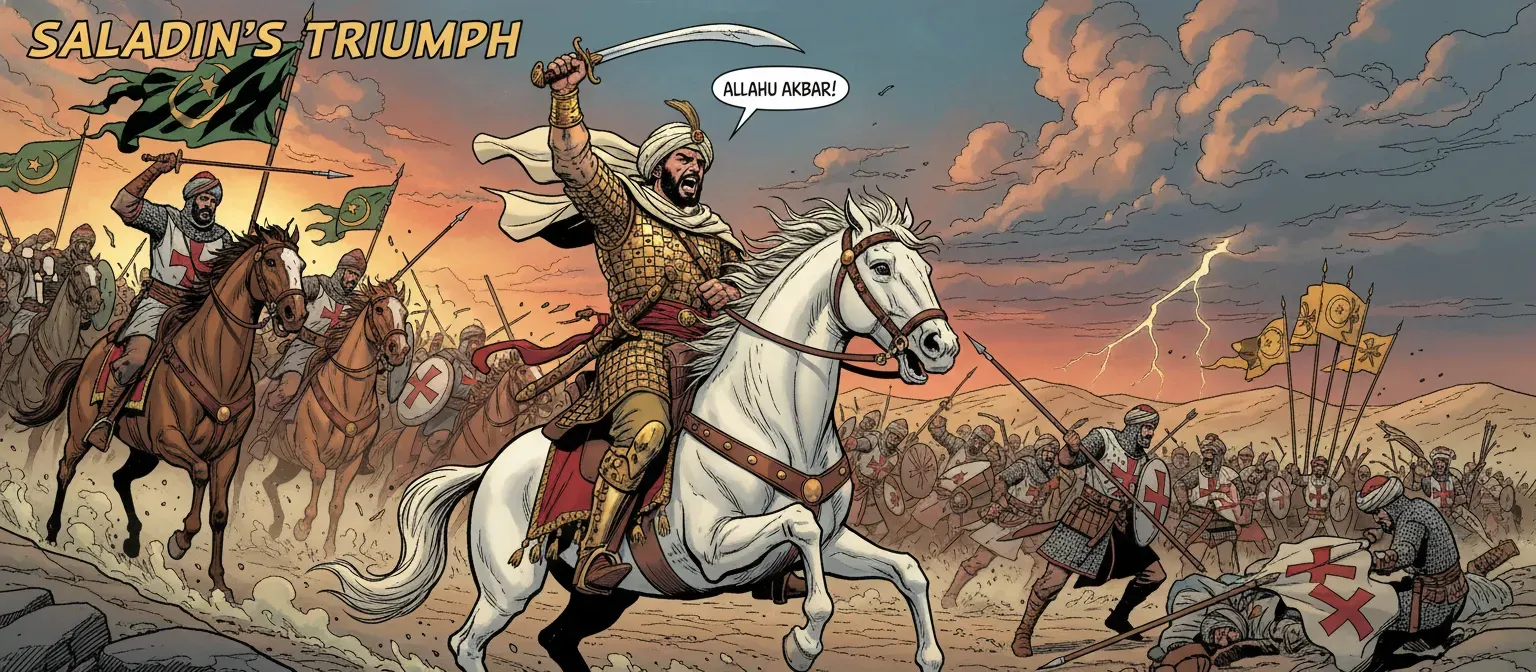
Did you know the Battle of Hattin in 1187 was a key moment in the Crusades? On July 4, 1187, Saladin’s forces achieved a crushing victory over the Crusader states. This victory changed medieval history.
This battle was more than a win on the battlefield. It led to the loss of Jerusalem and started the Third Crusade. As you learn about the Battle of Hattin, you’ll see Saladin’s strategic genius. You’ll also understand the big impact this medieval conflict had.
Key Takeaways
- Saladin’s victory at Hattin was a turning point in the Crusades.
- The battle led to significant territorial changes in the Levant.
- It sparked the Third Crusade, a major response from European forces.
- Saladin’s strategic leadership was instrumental in the victory.
- The aftermath of Hattin reshaped the political landscape of the region.
Historical Context: The Crusader States and Saladin’s Rise
The Battle of Hattin was a key moment in medieval history. It was shaped by the Crusader states and the rise of Saladin. To understand this battle, you must know the historical background.
The Kingdom of Jerusalem in the 12th Century
The Kingdom of Jerusalem was a Crusader state formed after the First Crusade. It faced internal struggles, with a “court faction” led by Guy of Lusignan and a “nobles’ faction” led by Raymond III of Tripoli. These divisions weakened the kingdom and made it hard to defend against threats.
Key Political Figures You Should Know
- Guy of Lusignan: The king of Jerusalem, facing challenges from within.
- Raymond III of Tripoli: A strong noble opposing Guy of Lusignan.
- Saladin: The Muslim leader who united factions against the Crusaders.

Knowing these leaders and their roles in the Crusader states is key. Their struggles and alliances led to the Battle of Hattin. This battle would decide the Kingdom of Jerusalem’s future.
The Road to Conflict: Tensions Before Hattin
Before the Battle of Hattin, tensions were high. The Crusader states and Saladin’s forces were at odds. This led to a major conflict in medieval history.
Raynald of Châtillon’s Provocations
Raynald of Châtillon was a key figure in the rising tensions. He raided a Muslim caravan in 1187, violating a truce. This move sparked more hostility, as Saladin wanted to defend his people and land.
The Broken Truce of 1187
Raynald’s raid broke the 1187 truce. This led to worse relations between Christians and Muslims. The broken truce meant both sides were ready for war.
Why Peace Failed Between Christians and Muslims
Several reasons led to the failure of peace. Raynald’s actions were a big factor. Historian Ibn al-Athir said,
“The Muslims were united in their resolve to defend their lands against the infidels.”
This unity and the Crusader aggression made peace hard to achieve.
| Event | Year | Impact |
|---|---|---|
| Raynald’s Raid | 1187 | Broken Truce |
| Saladin’s Response | 1187 | Escalation of Hostilities |
The Battle of Hattin: A Clash of Armies
On July 4, 1187, the fate of the Crusader states was decided at the Battle of Hattin. Two armies with different military strategies faced each other. The outcome would depend on the strengths and weaknesses of both sides.
The Christian Army Under Guy of Lusignan
The Christian army was strong, made up of knights, infantry, and military orders. Knights, with their heavy armor and horses, were key for a strong charge. Infantry and military orders like the Templars and Hospitallers added discipline and skill.
Knights, Infantry, and Military Orders
Knights were vital for their shock power on the battlefield. Infantry, less armored, were flexible and supported the knights. Military orders brought military might and strategic leadership.
Saladin’s Military Strength and Organization
Saladin’s army was set up with a centre and two wings, showing a superior military strategy. This setup allowed for quick responses to the Crusader army’s moves. Saladin’s forces were known for their mobility and tactical skill.
The Advantage of Light Cavalry
Saladin’s light cavalry was a key factor on the battlefield. These mounted archers could attack from afar, retreat, and then regroup. Their ability to move quickly was a big advantage, given the dry conditions around Hattin.

Battlefield Geography: The Horns of Hattin
What made the Battle of Hattin so important? A big reason was the unique geography of the Horns of Hattin. The battle happened near Tiberias in today’s Israel, with the Horns of Hattin being a key spot.

Strategic Importance of the Location
The Horns of Hattin are twin hilltops with a strategic view. They let Saladin’s forces control the area around them. The dry land and lack of water made it perfect for Saladin’s plans.
How the Summer Heat Became a Weapon
The summer heat in the area is very strong. During the Battle of Hattin, it played a big role. Saladin’s army was ready for it, but the Crusaders fought dehydration and tiredness.
The absence of water made things worse for the Crusaders. It turned the environment against them.
Key factors that influenced the battle:
- The geography of the Horns of Hattin
- The strategic use of the summer heat
- The lack of water sources for the Crusader army
Saladin’s Masterful Strategy
The Battle of Hattin shows Saladin’s military genius. You’re about to learn the tactics that led to his victory. His strategy was key to winning, combining clever moves and a deep understanding of the battlefield.

The Water Trap That Doomed the Crusaders
Saladin’s most effective tactic was to lure the Crusader army into a dry area. This made them dehydrated and weak. By controlling the water, Saladin gave the Crusaders a big disadvantage, making a long battle hard for them.
Encirclement Tactics You’ll Find Brilliant
Saladin also used encirclement tactics. He surrounded the Crusader army, cutting off their escape routes. This trapped the Crusaders and allowed Saladin’s forces to attack from all sides. The encirclement was a key factor in the battle, showing Saladin’s skill in adapting and outmaneuvering his foes.
By using these strategies, Saladin won a crushing victory at Hattin. His mastery of the battlefield and understanding of his enemy’s weaknesses were essential. The Battle of Hattin is a significant event in military history.
The Decisive Engagement: How the Battle Unfolded
The Battle of Hattin was a turning point for the Crusaders. Their march to Tiberias turned into a disaster. Led by Guy of Lusignan, they faced relentless attacks from Muslim archers.
The Crusader March to Disaster
The Crusaders’ march to Tiberias was risky. They were constantly attacked by Saladin’s forces. The desperate search for water became a major issue as they battled the heat.
The Desperate Search for Water
The summer heat was unbearable. Dehydration became a big problem for the Crusaders. They knew Saladin’s forces had poisoned or blocked many water sources.
The Final Stand at the Horns
At the Horns of Hattin, the Crusaders made their last stand. Despite their bravery, they were outnumbered and outmaneuvered.
The Capture of the True Cross
The loss of the True Cross was a huge blow. It was a powerful symbol of their faith. Its capture demoralized the Crusaders.
| Event | Description | Impact |
|---|---|---|
| Crusader March | Harassed by Muslim archers | Weakened Crusader forces |
| Search for Water | Dehydration and heat exhaustion | Reduced Crusader effectiveness |
| Final Stand | Outnumbered and encircled | Crusader defeat |
“The Battle of Hattin was a crushing defeat for the Crusaders, marking a turning point in the history of the Crusades.”
Aftermath and Historical Impact
The Battle of Hattin in 1187 was a key moment in the Crusades. It had a big impact on the Crusader States. This event changed the region and its people a lot.
Fate of the Crusader Leaders
After losing at Hattin, the Crusader leaders faced tough times. Many were caught, like King Guy of Lusignan by Saladin’s troops. Some were killed, others were freed for money.
Raynald of Châtillon was beheaded by Saladin for his troublemaking.
- King Guy of Lusignan was freed after paying a ransom.
- Many knights and nobles were either killed or captured.
- The loss of leadership weakened the Crusader States significantly.
The Fall of Jerusalem and the Third Crusade
Saladin’s victory at Hattin led to Jerusalem’s fall in October 1187. This event shocked Europe. It led to the call for the Third Crusade.
Richard the Lionheart and others tried to take back Jerusalem. They wanted to regain control over the Holy Land.
The Battle of Hattin’s impact went beyond immediate effects. It changed medieval history and the relationship between Christians and Muslims. It showed Saladin’s strength and the Crusader States’ weakness.
Conclusion: Why Hattin Stil Matters Today
The Battle of Hattin is a key moment in medieval history. It shows us how religious conflicts shape our world. This battle helps us understand the complex relationships between different groups today.
Hattin was a major event in the Crusades. It showed the deep religious and cultural tensions of the time. The battle’s result, the fall of Jerusalem, highlights the big impact of religious conflicts on history.
Learning about Hattin helps us understand today’s world. Religious and cultural conflicts are big issues now. By looking at Hattin’s events and outcomes, we can better grasp these complex issues.
FAQ
What was the significance of the Battle of Hattin in the Crusades?
The Battle of Hattin was a turning point in the Crusades. It led to the loss of Jerusalem. This sparked the Third Crusade.
Who were the key leaders involved in the Battle of Hattin?
Key leaders were Guy of Lusignan, King of Jerusalem, and Saladin, Sultan of Egypt and Syria. Raymond III of Tripoli and Raynald of Châtillon were also important.
What was the role of Raynald of Châtillon in the lead-up to the Battle of Hattin?
Raynald of Châtillon attacked Muslim caravans and trade routes. This broke the truce between Christians and Muslims, leading to the battle.
How did the geography of the battlefield impact the outcome of the Battle of Hattin?
The dry plateau and lack of water hurt the Crusader army. Saladin’s forces used the summer heat to their advantage.
What was Saladin’s strategy during the Battle of Hattin?
Saladin set a “water trap” for the Crusaders. He also used encirclement tactics to defeat them.
What were the consequences of the Battle of Hattin for the Crusader states?
The battle led to Jerusalem’s fall and the capture of the True Cross. It also started the Third Crusade. Crusader leaders were captured or fled.
Why is the Battle of Hattin relevant today?
The Battle of Hattin is key in medieval history. It shows the impact of religious conflicts. It also shapes our views on different religious and cultural groups.
What was the composition of the Christian army under Guy of Lusignan?
The Christian army had knights, infantry, and military orders. They were important in the battle.
How did Saladin’s military strength and organization contribute to his victory?
Saladin’s strength, including light cavalry, and organization were key. They helped him defeat the Crusader army at Hattin.

Leave a Reply